
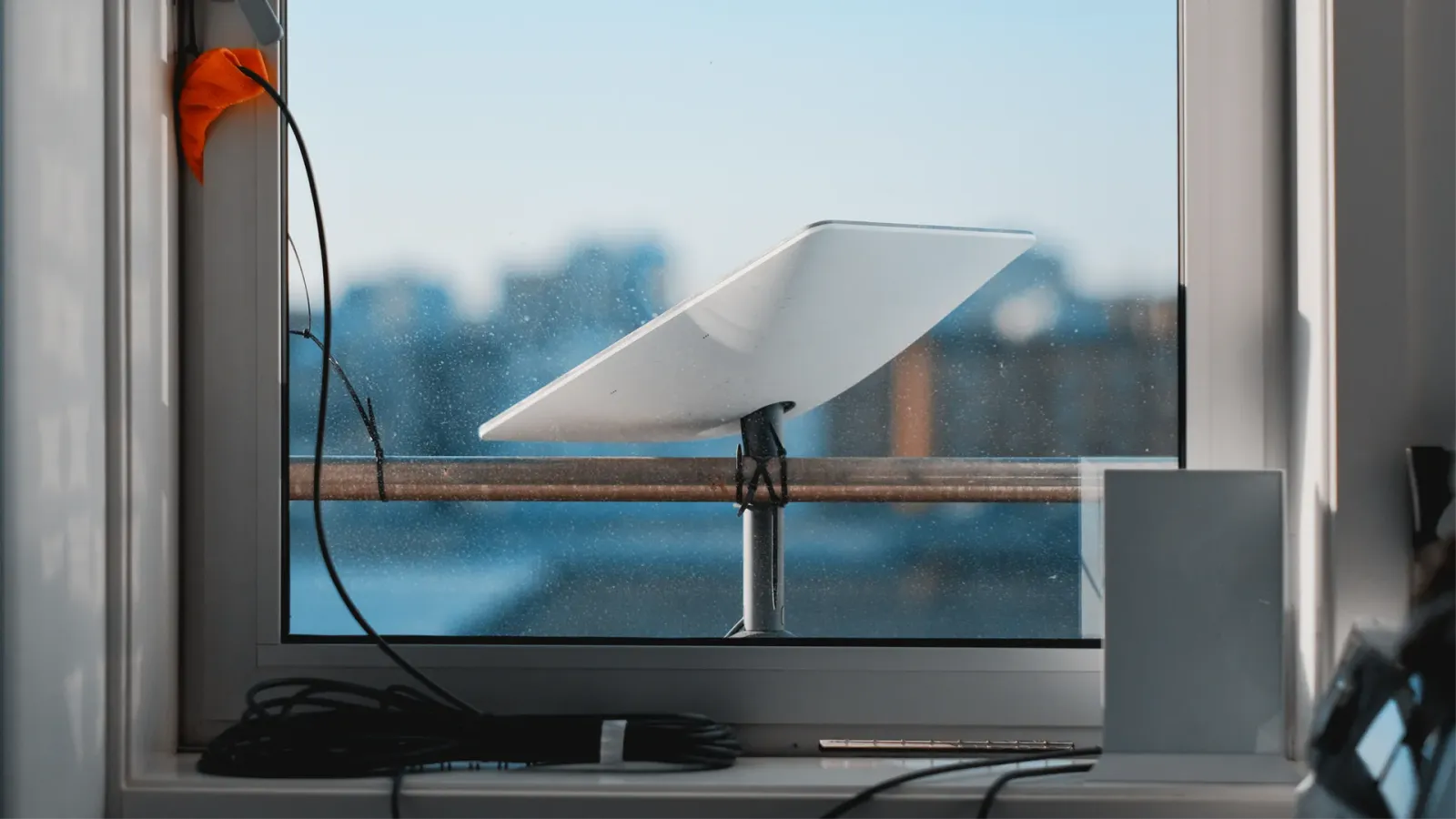
The dish went quiet during a July downpour, right in the middle of a video call. Or your connection slowed on a 108-degree afternoon, which Starlink’s own pages say can happen in extreme heat. If you live in Vail, Sonoita, Marana, Catalina, or another rural edge of the Tucson metro, you may have assumed satellite internet was your only option, and for many addresses that is no longer true. A Starlink alternative can mean fiber to the home or a fixed wireless link from a local tower, and each handles monsoon rain, summer heat, and mountain terrain differently. You’ll understand how each one works and how to check your own address.
Why Tucson Homes Start Looking for a Starlink Alternative
Most people shopping for an alternative to Starlink have one moment in mind. A hard rain knocked the signal out, the dish stopped on a hot afternoon, a mesquite crept into the sky view, or the hardware charge landed on the bill. Satellite is the right tool where no wire or tower reaches, so the question is whether something else does.
Starlink does not hide the tradeoff. Its support pages say moderate to heavy rain, snow, and hail can cause momentary dropouts, and they describe short drops that clear when the weather passes. Heat is the other limit it publishes.
Does Starlink Work in Bad Weather? Tucson’s Monsoon and Heat
The monsoon has an official calendar, set by the National Weather Service office in Tucson. Its safety page defines the June 15 to September 30 storm season as the monsoon and warns of early-season dust storms and thunderstorm downbursts all season long. Rain, dust, and wind arrive in the same afternoon.
Starlink publishes the heat limit. Its support article on extreme conditions lists the dish as rated to run outdoors from -22°F to 122°F, and it says performance may drop slightly in extreme heat or cold. The number to set beside that rating is how often Tucson runs hot.
The answer is often. Tucson averages 68 days a year at 100 degrees or hotter under the 1991 to 2020 climate normals, and 2024 set the record with 112. Heavy rain and triple-digit heat are the two stresses Starlink names, and Tucson delivers both.
Starlink vs Fiber vs Fixed Wireless: How Each Reaches the House
The three differ in how far the signal travels through open air. The FCC’s consumer guide ties satellite service to line of sight and weather, and it describes fixed wireless as longer-range directional equipment serving sparsely populated areas. Fiber carries data as light through glass strands, so the signal never crosses the sky.
Starlink is open about its numbers. The specifications document it publishes lists the download, upload and latency ranges most users see: downloads of 45 to 280 Mbps, uploads of 10 to 30 Mbps, and latency of 25 to 60 milliseconds on land. It adds that field of view and weather change those numbers.
Fixed wireless internet puts the radio link on the ground, between a tower and a receiver on your house, which is why terrain and tree cover matter for a tower link. The receiver stays aimed at one fixed point. That is where Tucson’s geography decides things.
Mount Lemmon rises 9,147 feet and Mica Mountain 8,668 in Tucson’s most prominent range and its neighbor to the east, the Santa Catalinas and the Rincons. A tower on high ground sees across the valley floor; a house behind a ridge may not. Fiber has no such limit, but it only reaches where someone has built it.
What a Tucson-Area Address Can Get, and What It Costs
Start with the FCC National Broadband Map. Type in an address and the map lists every provider that reports serving your address, with the service type and speeds each reports, from data that providers file twice a year. A provider’s own availability check then confirms an install.
Around Tucson, that list often includes two technologies from one local company. Bluespan’s Fiberwave service connects fiber to towers around the region and sends the connection wirelessly to a small receiver installed on your property, at 250 Mbps to 1 Gbps. Where Bluespan has built fiber to the home, its site lists 1, 2, 5, and 8 gigabit plans with matching uploads.
Here is the price picture as of October 2026. Starlink’s residential page shows the three home plans currently on sale: Residential 100 Mbps at $55 a month, Residential 200 Mbps at $85, and Residential Max at $130, with no upfront hardware cost in select areas and a note that speeds are maximums.
The local side of the comparison sits on what each tier costs per month right now: Fiberwave from $49 a month for 250 Mbps, and fiber to the home from $69 for 1 gigabit up to $109 for 8 gigabits. That page also states unlimited data, no contracts, free installation, lifetime equipment coverage, and no price hikes after the first year. Compare the plan you would actually buy.
Questions Tucson-Area Homes Ask Before Leaving Satellite
The same handful of questions come up whenever a household on the edge of Tucson weighs a satellite dish against a wired or tower-based connection. Some are about weather, some about money, and one about the week when both services overlap. The answers rest on Starlink’s published pages and on what Bluespan states on its site.
Does Starlink work in cloudy or light-rain weather? Clouds and light rain are not what Starlink warns about. Its weather article names moderate to heavy rain, snow, and hail as the causes of momentary dropouts, which here means the monsoon burst.
Can I keep Starlink as a backup while I switch? Yes, and ordering the new service first is safest. The smoothest switch is to keep the old service running until the new one passes your own tests, then cancel.
Will fixed wireless internet drop in a monsoon storm too? Any radio link can feel a severe storm. A tower link crosses open air between two fixed points on the ground, not orbit, and Bluespan says it engineered its network for Arizona conditions and publishes a 99.9% uptime figure.
What does an obstruction scan actually tell me? Before you mount the dish, the install guide from Starlink tells you to scan the sky for anything that blocks the dish, because trees, poles, and other objects can interrupt service. Once online, the dish maps the blockages it hits.
Is there a cheaper alternative to Starlink for a rural Tucson home? Often, but only at addresses a tower or fiber line already reaches. Bluespan’s lowest Fiberwave plan starts at $49 a month against Starlink’s $55 entry plan, with free installation and no contract.
A Starlink Alternative Built for Tucson’s Weather
The best Starlink alternative for a Tucson-area home is the one that reaches your address and keeps working through a July downpour and a 110-degree afternoon. Starlink’s own pages are honest about its weather and heat limits. Fiber keeps the signal inside glass, and fixed wireless keeps the radio path on the ground.
Bluespan, locally owned in Arizona since 2001, serves 15,000+ Arizona homes and businesses, holds an A+ BBB rating, and answers the phone from a Tucson-based team. If the dish has let you down once too often, see what reaches your address before you decide, because in places like Vail and Marana you usually have a better option than a dish.